
Sultanahmet Walking Tour: The Self-Guided Old City Route
- Distance
- 3.2 km
- Time on foot
- 2 h walking · 4–6 h with visits
- Start
- Sultanahmet tram stop (T1 line)
- End
- Grand Bazaar, Beyazıt gate
This is the walk almost everyone does on their first morning in Istanbul — done in the right order. The monuments of the old city stand within a few hundred meters of each other on the first hill, so the skill is not navigation; it is sequencing around queues and prayer times. Follow the order below and you will spend your time inside the buildings, not in lines outside them.
Getting to the start
Take the T1 tram to Sultanahmet stop from either direction (Kabataş side or Bağcılar side). From the platform, walk 200 m uphill along Divan Yolu — the Roman road that once ran to the city gates — and turn left into the long open square with the obelisks. You are standing in the Hippodrome. If you are staying in Sultanahmet itself, start here directly at 08:30.
Stop 1 — The Hippodrome (20 minutes)
The elongated square called At Meydanı is the footprint of the Byzantine chariot stadium that held 100,000 spectators. Walk its length from north to south and you pass three survivors: the German Fountain (a 1900 gift from Kaiser Wilhelm II), the Obelisk of Theodosius — Egyptian granite from 1450 BC, still crisp after 3,400 years — and the strange bronze stump of the Serpent Column, cast from the shields of the Persian army defeated at Plataea in 479 BC. Nothing needs a ticket; this is the best free open-air museum in the city.
Stop 2 — The Blue Mosque (30–40 minutes)
At the south end of the Hippodrome, the six minarets on your left belong to the Sultan Ahmed Mosque, the Blue Mosque. Enter through the courtyard gate facing the Hippodrome, not the tourist funnel on the marble road — you get the full effect of the cascading domes first. Entry is free; dress modestly (shoulders and knees covered, headscarves provided for women, shoe bags at the door). Inside, the name explains itself: more than 20,000 İznik tiles in blues and greens climbing every surface.
Stop 3 — Hagia Sophia (1–1.5 hours)
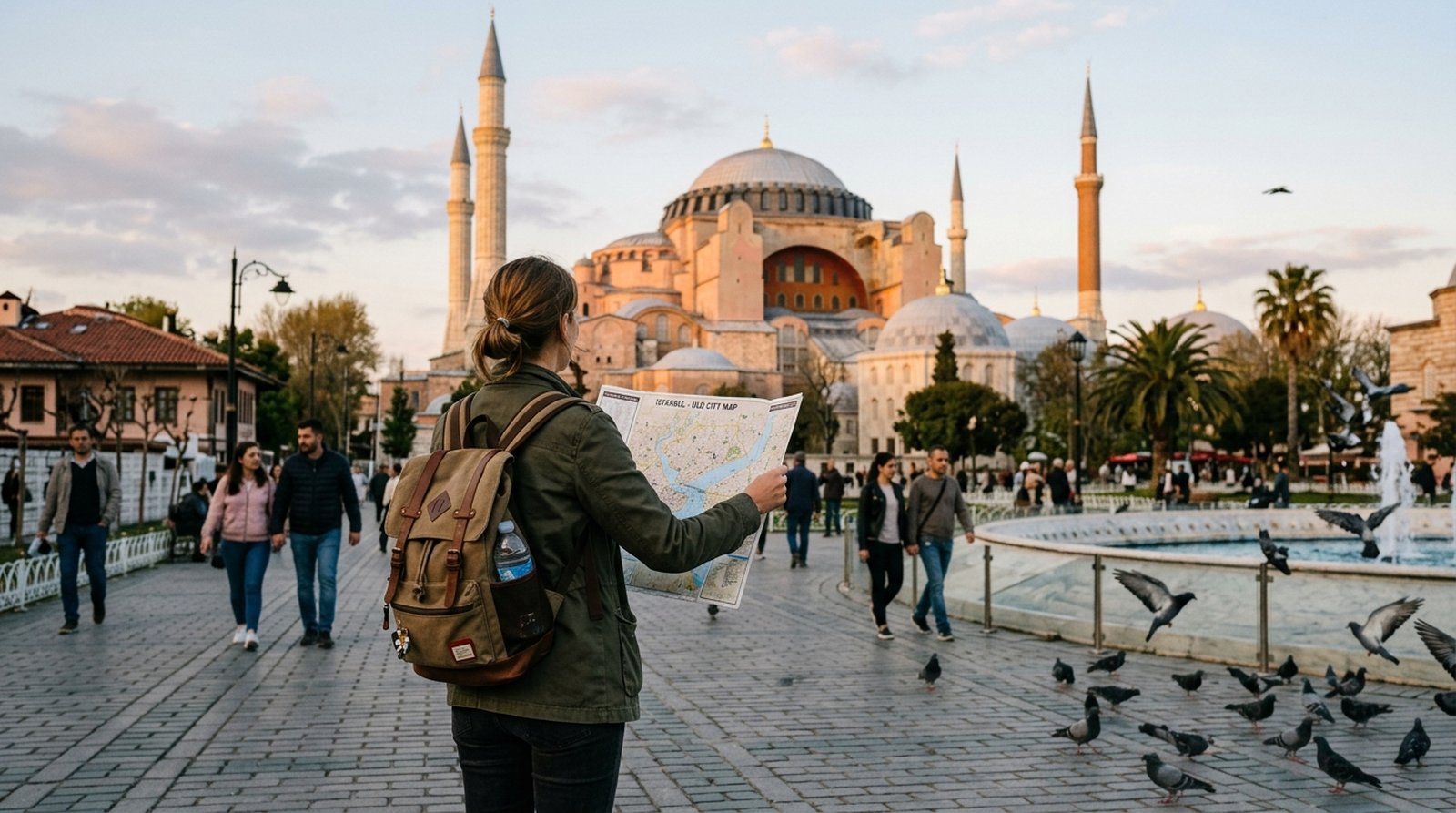
Cross the park with the fountain between the two great buildings — the classic photo spot in both directions — to Hagia Sophia, a 1,500-year-old cathedral-turned-mosque and the building that defined domed architecture for a millennium. Since 2024, foreign visitors use a dedicated ticketed route via the upper gallery, which is exactly where the famous Byzantine mosaics are.
Ticket tip: the visitor entrance regularly sells out in high season. Book a skip-the-line slot at istanbulhagiasophiatickets.com before you set out, and walk past the ticket queue.
Stop 4 — Basilica Cistern (30–45 minutes)
Exit Hagia Sophia and cross the tram street diagonally to the low stone kiosk marked Yerebatan Sarnıcı. Underground, 336 recycled Roman columns rise out of shallow black water — cool, dripping and theatrically lit, the perfect antidote to the midday heat. Find the two Medusa heads lying sideways and upside-down under the far corner columns; nobody knows for certain why. Entry is ticketed and timed — reserve at istanbulbasilicacisterntickets.com to pick your slot.
Stop 5 — Gülhane Park and the Topkapı gate (25 minutes)
Walk downhill beside the tram line one stop to Gülhane Park, the old palace gardens — plane trees, tulip beds in spring, and tea gardens with Bosphorus views at the far end. The imposing gate at the park’s uphill entrance is the Imperial Gate of Topkapı Palace, home of the Ottoman sultans for 400 years. The palace deserves half a day on its own; if you want to add it to this route, do it here and accept that the Grand Bazaar moves to tomorrow. Book palace entry ahead at istanbultopkapipalacetickets.com — the ticket windows are the slowest in the city.
Stop 6 — Divan Yolu to the Grand Bazaar (30 minutes)
Return to Divan Yolu and follow it uphill, away from Hagia Sophia. You pass the Çemberlitaş column — Constantine’s burned porphyry pillar from 330 AD, the point from which the Byzantine city measured itself — and the Ottoman tomb gardens beside it. Two hundred meters further, duck right through the Nuruosmaniye Mosque courtyard: its gate frames the entrance of the Grand Bazaar. Inside are 4,000 shops on 60 covered streets. Do not try to see it systematically; get lost deliberately, drink the tea a carpet seller offers you (it commits you to nothing), and haggle only for things you actually want. Exit at the Beyazıt gate for the tram home, or stay until the light turns gold.
Where to eat on the route
Skip the laminated-menu places ringing the Hippodrome. Two hundred meters down the hill toward Sirkeci, the lokantas of Hocapaşa Sokak serve the food Istanbullus actually eat — point at the steam trays and you will not order wrong. In the bazaar quarter, the courtyard of Şark Kahvesi does proper Turkish coffee at non-tourist prices.